Veillez à ce que toute contamination résiduelle par des hydrocarbures, les débris de construction et les corps étrangers soient éliminés du tuyau d'oxygène gazeux.
Nettoyage de la conduite d'oxygène
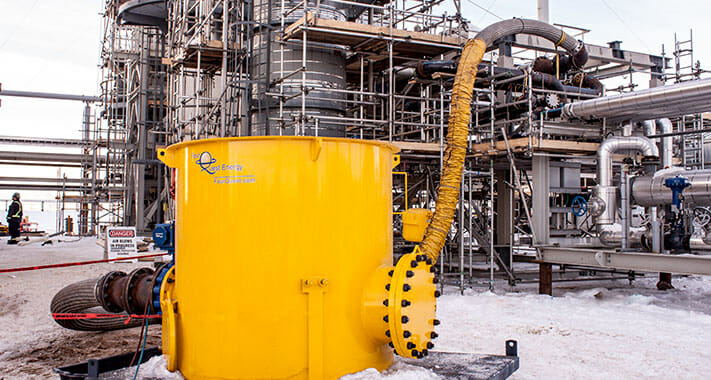
Engineering Efficiencies Developed for Air Blowing - Case Study
Une entreprise exploitant les sables bitumineux dans le nord de l'Alberta avait besoin de nettoyer 1 km de conduite BFW de 24 pouces à l'aide de souffles d'air ciblés dans le cadre du processus de pré-mise en service.
Due to the size of the line, the procedure was developed to split the line into three sections for the air blows. By dividing the line into three sections, we were able to execute the air blows with a single 1600cfm air compressor and dryer spread, saving over $10,000 per week per additional spread.
The length of the line posed onsite logistical problems with relocating spreads with every section. To mitigate this, we engineered our plan to reduce equipment movement around site and have our main compressor set up remain in one place for all three sections. This provided substantial cost and time savings to our client. Additionally, we utilized two silencers in a ‘leap frog’ format, to ensure 1 section was always being blown. This design allowed us to save our client over $52,000 in onsite equipment movement and delayed rig in time.
Each section of pipe was blown using decompression air blows to achieve the required cleaning force of 1.3, or 1.3 times the force generated during the operation of the line. For each blow, the line is pressurized by the air compressor and dryer to the engineered pressure, then the air is quickly released from one end of the piping. This rapid depressurization would remove any loose debris from the piping. Each section was blown until the required target specification was achieved.